Identity in Diaspora: The Story of ASEAN Professionals in the GCC

Beyond the monolithic labels of 'expat' or 'migrant worker' lies the complex and dynamic narrative of the thousands of ASEAN professionals in the GCC. This rapidly growing cohort of talent is not merely filling roles; they are actively co-authoring the next chapter of the Gulf-ASEAN economic corridor, bridging capital, commerce, and culture between two of the world's most pivotal regions. Yet, their stories-rich with ambition, adaptation, and a search for identity-are often lost in high-level economic analysis and broad-stroke generalisations, leaving many feeling disconnected and misunderstood.
This article moves past the data to offer a human-centred exploration of their lived experiences. We address the critical questions for both aspiring professionals and regional leaders: How does one navigate the intricate interplay of career ambition and cultural heritage in a new environment? What are the true opportunities and challenges beyond the boardroom? Through in-depth interviews and analysis, we uncover the motivations driving this diaspora, their contributions across key sectors, and the multifaceted identities they are forging at the intersection of two vibrant worlds. Join us to understand the people shaping the future of the Gulf-ASEAN nexus.
The New Wave: From Labour Migration to a Professional Corridor
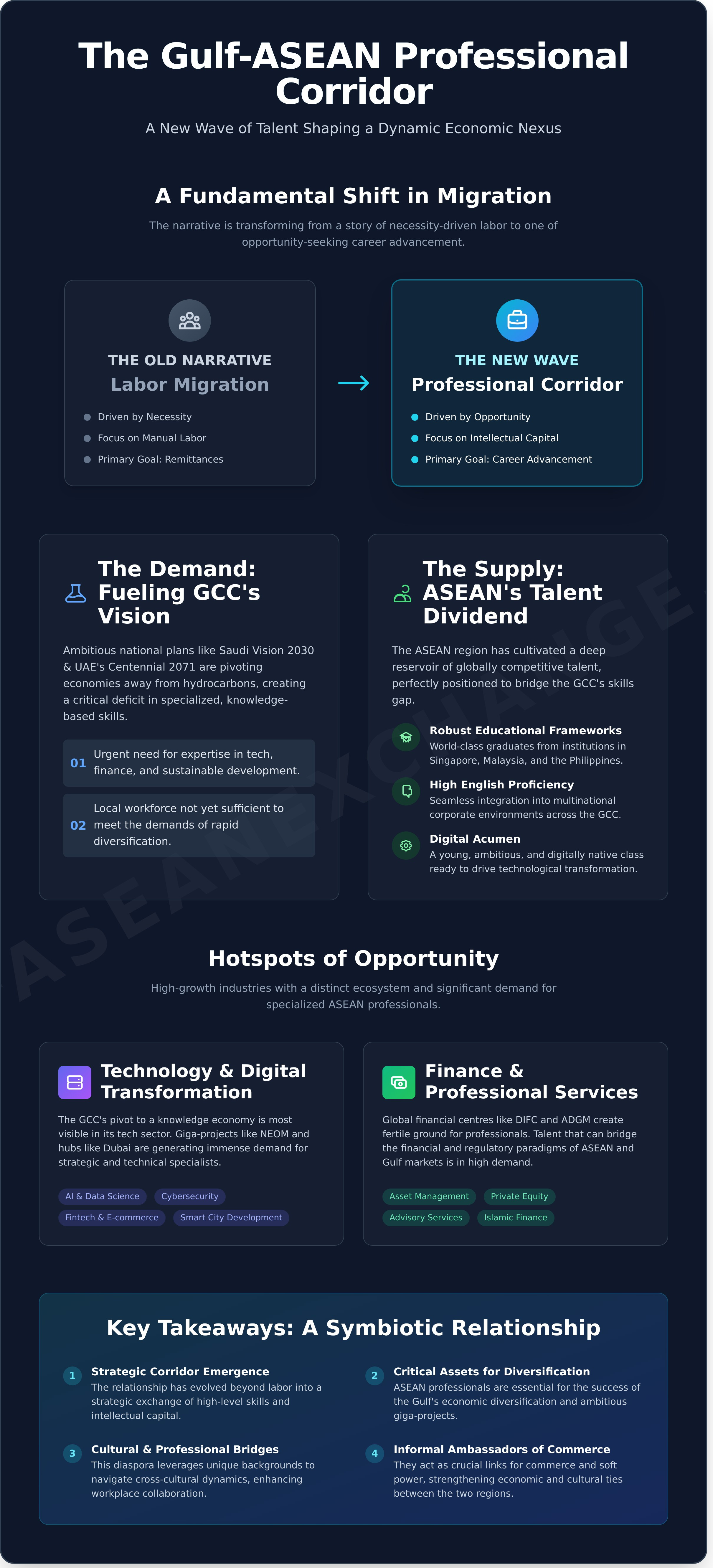
The narrative of Southeast Asian expatriates in the Gulf is undergoing a profound transformation. For decades, the story was dominated by labour migration, a flow of human capital driven largely by necessity. Today, a more complex and strategic dynamic is emerging: the formation of a professional corridor. This new wave is defined not by remittances, but by careers; not by manual labour, but by intellectual capital. The modern ASEAN professional in the Gulf is an architect, a digital strategist, a financial analyst, or a project manager, drawn by the region's ambitious economic diversification and the opportunity to contribute to globally significant projects. This represents a fundamental shift from necessity-driven migration to opportunity-seeking career advancement.
Economic Drivers: Why the GCC Needs ASEAN Talent
The Gulf Cooperation Council's (GCC) ambitious national transformation plans, most notably Saudi Vision 2030 and the UAE's Centennial 2071, are the primary catalysts for this demand. As these nations pivot from hydrocarbon-based economies to diversified, knowledge-based hubs, they face a critical deficit in specialised skills. This creates an urgent need for expertise in sectors like technology, sustainable development, finance, and logistics-competencies that are not yet sufficiently available within the local workforce.
This confluence of demand and supply is forging more than just a migratory path; it is creating a strategic human capital bridge between the two regions. The growing presence of asean professionals in gcc countries is a testament to this evolving relationship, signalling a new era of intellectual and economic exchange. This corridor is becoming a critical artery for talent, ideas, and innovation, fundamentally reshaping the professional landscape of the Gulf-ASEAN nexus.
Hotspots of Opportunity: Key Sectors for ASEAN Professionals
The Gulf Cooperation Council's ambitious economic diversification agendas have created an unprecedented demand for specialized talent, transforming the region into a magnet for skilled individuals. This dynamic is a key driver of the deepening people-to-people connectivity between the two blocs, moving beyond traditional labour migration to a more strategic exchange of expertise. For the growing community of asean professionals in gcc countries, this shift opens corridors of opportunity across several high-growth industries, each with a distinct ecosystem and demand profile.
Technology and Digital Transformation
The GCC's pivot towards a knowledge-based economy is most visible in its tech sector. Dubai continues to solidify its role as a regional hub for fintech, e-commerce, and venture capital, attracting Southeast Asian founders and developers. In parallel, Saudi Arabia’s giga-projects like NEOM are generating immense demand for specialists in engineering, smart city development, AI, data science, and cybersecurity. The skills most sought-after are not just technical but also strategic, requiring an understanding of how to scale digital infrastructure in rapidly evolving markets.
Finance, Banking, and Professional Services
The financial centres of Dubai (DIFC) and Abu Dhabi (ADGM) offer a regulatory environment that rivals global capitals, creating fertile ground for finance professionals. Experts from Singapore and Malaysia, with their sophisticated understanding of both conventional and Islamic finance, are particularly well-positioned. Opportunities abound in asset management, private equity, and advisory services, with a notable demand for talent that can bridge the financial and regulatory paradigms of the ASEAN and Gulf markets, particularly within the burgeoning Islamic finance sector.
Healthcare, Hospitality, and Lifestyle
As the GCC invests heavily in social infrastructure, the demand for world-class services has surged. The region’s state-of-the-art healthcare systems require highly skilled medical professionals, a field where many ASEAN countries excel. Furthermore, the luxury hospitality and lifestyle sectors, central to the tourism strategies of cities like Dubai and Doha, place a premium on the nuanced, service-oriented culture for which professionals from nations like the Philippines and Thailand are renowned. This demand extends into the growing wellness and entertainment industries, creating diverse career pathways.
Navigating the Terrain: Professional Culture and Daily Realities
For the many ASEAN professionals in GCC nations, the transition extends far beyond the physical climate. The Gulf's professional landscape presents a sophisticated blend of hyper-modern corporate ambition and deeply rooted cultural traditions, a dynamic that requires significant adaptation. Success is often contingent not just on technical expertise but on mastering a nuanced set of unwritten rules governing relationships, communication, and authority.
The GCC Workplace: A Blend of Tradition and Modernity
The day-to-day operational rhythm in the Gulf can differ markedly from that in Southeast Asia. While ASEAN business culture often values consensus and indirect communication, GCC workplaces can be more hierarchical and direct. Decision-making is frequently centralized, and understanding this structure is paramount. Furthermore, the concept of wasta-leveraging personal connections and relationships-is a fundamental component of commerce. It is not merely networking; it is about building deep, long-term trust, a currency as valuable as capital itself in this region.
Beyond the Office: Building a Life in the Gulf
The legal and social frameworks governing expatriate life are a critical consideration. The traditional sponsorship or Kafala system, which ties an employee's residency to their employer, is evolving. Progressive policies like the UAE's Golden Visa and Saudi Arabia's Premium Residency are fundamentally altering the long-term settlement calculus, offering greater stability and autonomy. Professionals must navigate the choice between the comfort of the 'expat bubble' and the richer, more complex experience of genuine local integration, all while managing the high cost of living in hubs like Dubai or Doha.
Identity and Belonging
At its core, the expatriate journey is one of identity negotiation. ASEAN professionals must balance their national and cultural heritage with the demands of a new, often transient, cosmopolitan reality. This can involve anything from finding community groups to accessing familiar foods through specialized online stores like Shift 2 Fresh that serve the UAE's South and Southeast Asian communities. Faith and personal values, which may be private matters in a secular ASEAN state like Singapore, often intersect with public and professional life in the Gulf. Navigating potential cultural misunderstandings and stereotypes requires resilience and a high degree of emotional intelligence, transforming professional challenges into profound opportunities for personal growth and cross-cultural success.
Building Bridges: The Diaspora's Role in Soft Power and Commerce
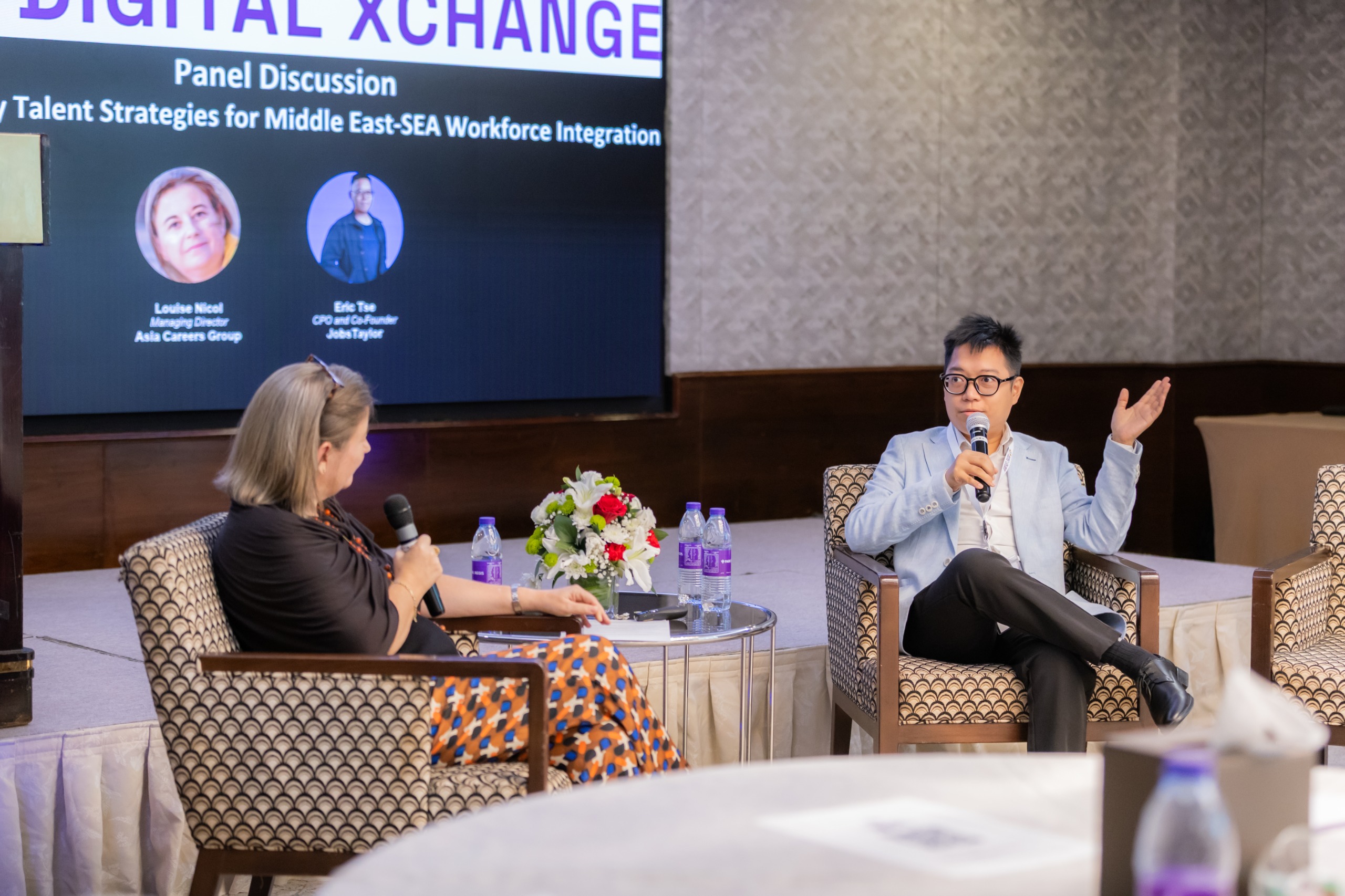
Beyond their direct economic contributions, the diaspora of asean professionals in gcc countries functions as a powerful, albeit informal, diplomatic and commercial corps. Each individual, through their professional conduct and social interactions, becomes an ambassador for their home nation, shaping perceptions and fostering goodwill. This collective soft power is not a state-directed policy but an organic outcome of a community deeply invested in two regions. They are the human infrastructure of the burgeoning Gulf-ASEAN corridor, translating cultural nuances and identifying strategic alignments that data alone cannot reveal.
Professional Networks and Community Hubs
This influence is consolidated through a web of networks, both formal and informal. While established business councils and national associations provide an official platform for high-level dialogue and policy advocacy, the real velocity of connection often happens in more agile spaces. LinkedIn and WhatsApp groups have become indispensable digital hubs for sharing market intelligence, job opportunities, and regulatory updates. Within these communities, a culture of mentorship thrives, where seasoned executives guide newcomers, significantly shortening the learning curve for those navigating a new professional landscape.
The Future of the Gulf-ASEAN Human Capital Corridor
The dynamic between the Gulf and Southeast Asia is rapidly evolving, maturing from a transactional labour relationship into a sophisticated human capital corridor. This transformation is propelled by the GCC's strategic pivot towards knowledge-based economies and the rising global competitiveness of ASEAN talent. Technology acts as a critical accelerant in this exchange, with digital platforms creating a more fluid and transparent marketplace where specialised skills from Southeast Asia can seamlessly connect with high-value opportunities in the Gulf.
Impact of Progressive Visa Reforms
Landmark policy changes are fundamentally reshaping the value proposition for professionals. Initiatives like the UAE's Golden Visa and Saudi Arabia's Premium Residency program are systematically decoupling residency from single-employer sponsorship. This paradigm shift empowers top-tier talent with unprecedented mobility and security, encouraging them to invest their expertise and capital into the region's economy for the long term, rather than viewing their tenure as merely a temporary station.
The Long-Term Vision
These reforms raise a critical question: will a greater number of professionals begin to view the GCC as a long-term home? The potential for this is immense, suggesting a future where the flow of human capital fosters deeper, more resilient economic integration. As the community of asean professionals in gcc puts down roots and cross-cultural networks flourish, the relationship transcends commerce, building a robust foundation of shared progress and mutual understanding within the vital Gulf-ASEAN nexus.
Looking ahead, the next decade promises a significant maturation of this professional exchange. We predict a rise in intra-regional entrepreneurship, with ASEAN founders leveraging GCC capital and market access, particularly in high-growth sectors like fintech, sustainable development, and logistics. The enduring importance of this relationship is a core focus of our ongoing analysis at Gulf–ASEAN Exchange, as we continue to bridge community, capital, and commerce across these two pivotal regions.
The Enduring Bridge: Charting the Future for ASEAN Talent in the Gulf
The narrative of migration between Southeast Asia and the Gulf is undergoing a profound transformation. What was once primarily a labour channel is now a dynamic, two-way corridor for skilled talent, with individuals shaping not just corporate landscapes but also the very fabric of cross-regional commerce and soft power. The experience of asean professionals in gcc is therefore no longer one-dimensional; it is a complex tale of ambition, adaptation, and the creation of new transnational identities. This human capital bridge is solidifying, promising a future where shared expertise and cultural exchange become the primary drivers of the Gulf-ASEAN relationship.
Understanding the nuances of this evolving nexus is critical for today's leaders. For deep-dive analysis powered by human-centred journalism from regional experts, join an exclusive community of founders and policymakers. Gain strategic insights on this corridor by subscribing to The Gulf-ASEAN Brief. As this vital connection deepens, staying informed is the first step toward seizing the opportunities it presents.
Frequently Asked Questions
What are the most in-demand jobs for ASEAN professionals in the GCC right now?
Current demand is heavily influenced by the Gulf's strategic diversification away from hydrocarbons. Consequently, professionals with expertise in technology (AI, data science, cybersecurity), sustainable development (renewable energy, urban planning), and financial services (fintech, private equity) are highly sought after. Sectors like luxury hospitality, healthcare management, and advanced logistics also present significant opportunities, valuing the high standards of service and technical skill often found in the ASEAN professional talent pool.
How does the work culture in Dubai or Riyadh differ from Singapore or Kuala Lumpur?
Work culture in the Gulf, particularly in hubs like Dubai and Riyadh, is often more hierarchical and relationship-driven compared to the generally more transactional and fast-paced environments of Singapore or Kuala Lumpur. Building personal trust and rapport (known locally as 'wasta') can be crucial for business success. Decision-making processes may be more centralized, and the workweek, traditionally Sunday to Thursday in many parts of the region, also represents a significant operational adjustment.
What are the biggest challenges ASEAN professionals face when relocating to the Gulf?
Beyond initial cultural adaptation, key challenges include navigating the bureaucratic intricacies of visa and residency permits, which can be complex despite recent reforms. Securing family accommodations and school placements in competitive urban centers like Dubai requires significant advance planning. Professionally, adjusting to a communication style that can be less direct than in many ASEAN business cultures and building a new professional network from scratch are often cited as considerable hurdles.
How do salaries and tax-free benefits in the GCC compare to high-paying roles in ASEAN?
While the tax-free salary is a primary attraction, a direct comparison requires a nuanced analysis of the entire compensation package. High-paying roles in the GCC often offer substantial remuneration, but the cost of living-particularly for housing, international schooling, and healthcare-can be significantly higher than in cities like Bangkok or Kuala Lumpur. A senior executive role in Singapore, while taxed, may offer comparable net earnings once a comprehensive cost-benefit analysis of the provided allowances is conducted.
Is it possible to build a long-term career and life in the GCC as an ASEAN national?
Yes, building a long-term expatriate career is increasingly viable. Initiatives like the UAE's Golden Visa and Saudi Arabia's Premium Residency offer pathways for extended stays for investors, entrepreneurs, and highly skilled professionals, providing greater stability than traditional work visas. However, it is crucial to understand that these frameworks are designed for long-term residency rather than a direct path to citizenship, which remains exceptionally rare for foreign nationals throughout the region.
For globally-minded professionals also considering European Union options as a long-term strategy, specialist firms such as Quantome Passport can provide expert guidance on pathways to citizenship.
What role do professional networks play in achieving success in the Middle East?
Professional networks are not just beneficial; they are fundamental to career progression in the Middle East. Success is often contingent on relationships built on trust and mutual respect, which facilitate commercial opportunities and provide critical business intelligence. For many ASEAN professionals in the GCC, actively participating in country-specific business councils, industry associations, and alumni groups is a strategic imperative for navigating the market, validating opportunities, and establishing a credible presence within the business community.